


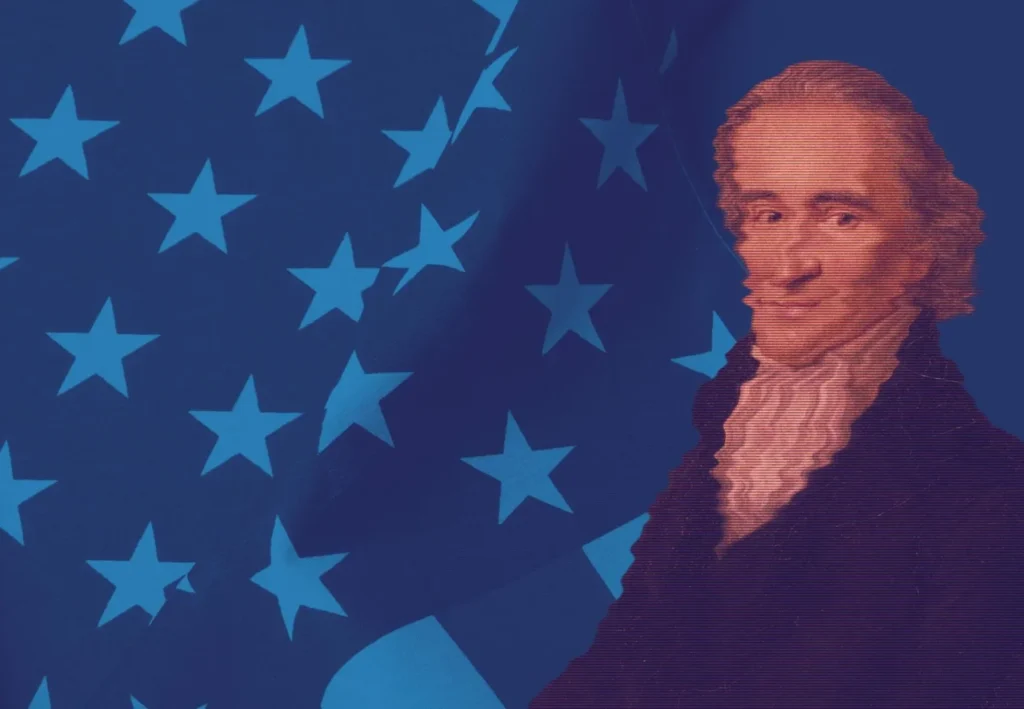
A brief walk through the historic landmarks of Philadelphia or Washington, D.C., reveals busts, statues, and memorials honoring the key figures of the American Revolution — George Washington, Thomas Jefferson, and even lesser-known names like Gouverneur Morris.
Meanwhile, Thomas Paine is conspicuously absent from the public space. His pamphlet Common Sense, a foundational text of American independence, is given only a modest mention at the Museum of the American Revolution in Philadelphia and a small display at the National Museum of American History in Washington, D.C. An unsuspecting visitor might easily assume Paine was a minor character—if they notice him at all.
But Paine was far from a mere supporting actor. He was a leading voice, witness, and interpreter not only of the American Revolution, but also of the French and Irish Revolutions and the late 18th-century English Jacobin movements. Recently uncovered documents suggested he played a central role in a far-reaching international reformist movement during the latter half of the 1700s.
Who Was Thomas Paine?
Thomas Paine was born on January 29, 1737, in Thetford, a small English town of about 2,000 people in Norfolk County. His father, Joseph Pain, was a corset maker and a Quaker who opposed slavery, the death penalty, clerical hierarchy, and military service.
At thirteen, Paine left grammar school to learn his father’s trade, but his life soon took another path. While still young, he went on two sea voyages, serving aboard the Terrible under the legendary Captain Death, and later the King of Prussia. Contrary to older biographies, newly uncovered records indicate that Paine began writing and engaging in political discussions early on—activities that would soon bring him into contact with critics of the British monarchy and, eventually, Benjamin Franklin.
At 37, Paine immigrated to Philadelphia, where he aligned himself with a group of working-class radicals, far removed from the merchant elite who would only rise to prominence after 1776. Among his circle were Benjamin Rush, Timothy Matlack, Christopher Marshall, James Cannon, David Rittenhouse, Owen Biddle, Thomas Young, and Charles Wilson Peale.


In Pennsylvania, Paine joined the Philadelphia Anti-Slavery Society and worked as a writer and editor for the Pennsylvania Magazine and later the Pennsylvania Journal. His essays against English despotism, slavery, and in defense of women’s and Indigenous rights made him a widely read and influential author.
Common Sense
His first major pamphlet, Common Sense (1776), sold 150,000 copies in a country with just 400,000 literate readers. For comparison, Benjamin Franklin’s Poor Richard’s Almanack sold around 10,000 copies a year between 1750 and 1760.
While many colonial leaders still hoped to reconcile with the Crown, Paine dismissed the idea as futile, arguing that there was no future in clinging to the “rights of free Englishmen.” To him, England was not a republican model, but an aristocratic relic unworthy of emulation. He even criticized the so-called Glorious Revolution of 1688–1689 as incomplete, writing:
“Though we have been wise enough to shut and lock the door against absolute monarchy, we have, at the same time, been foolish enough to leave the crown in possession of the key.”

In Common Sense, Paine directly challenged the authority of Montesquieu and argued that the independence of the Thirteen Colonies would give birth to a great republic. The pamphlet had an immediate impact: George Washington claimed it “worked a powerful change in the minds of many men.” For Thomas Jefferson, Paine’s republicanism “outshone everything ever written on the structure of government” and “created a new political language.”
However, it was The Age of Reason that would most contribute to Paine’s eventual ostracization. In it, he argued that the Bible could not be considered the word of God—a stance that drew fierce backlash. President Theodore Roosevelt famously called him a “filthy little atheist.” As a result, only six people attended Paine’s funeral in 1809 in New Rochelle — just enough to carry his coffin.
In the years that followed, Paine authored other crucial texts of the American Revolution, including the American Crisis papers (1776–1783) and Letter to the Abbe Raynal (1782). He fought in battles and held political roles, such as Secretary to the Committee for Foreign Affairs.
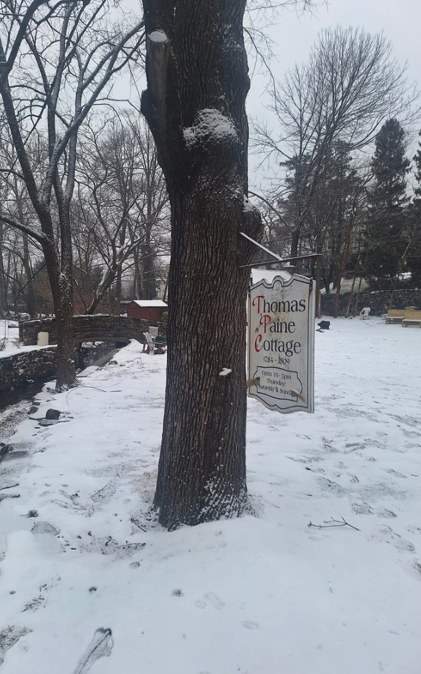
After the Revolution, he remained active during the French Revolution and spent time in England. Sentenced to death in his homeland and narrowly escaping the guillotine in Jacobin France, Paine eventually returned to the U.S., settling in New Rochelle on a property granted to him for his revolutionary service. Today, the site houses the Thomas Paine Association.
Thomas Paine: A Radical Thinker
The term radical, which entered political usage in the 1790s, was already being used by Paine’s critics to describe him. And indeed, from various angles, Paine can be seen as more radical than the traditional Founding Fathers. He openly opposed slavery, explicitly supported democracy as early as 1791, and by 1797, he was advocating for a universal basic income.

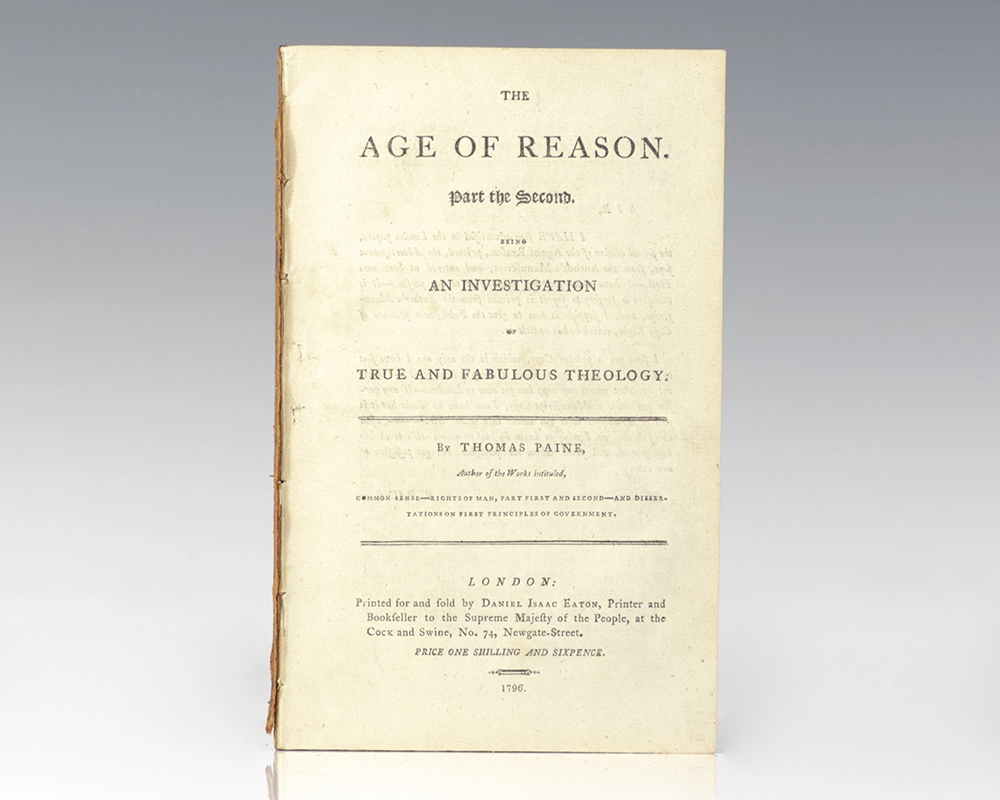
However, it was The Age of Reason that contributed most to Paine’s lasting ostracism. In this work, he argued that the Bible could not be considered the word of God, a stance that drew fierce criticism. President Theodore Roosevelt, for instance, referred to him as a “filthy little atheist.” As a result of the backlash, only six people attended his funeral in 1809 in New Rochelle—just enough to carry his coffin.